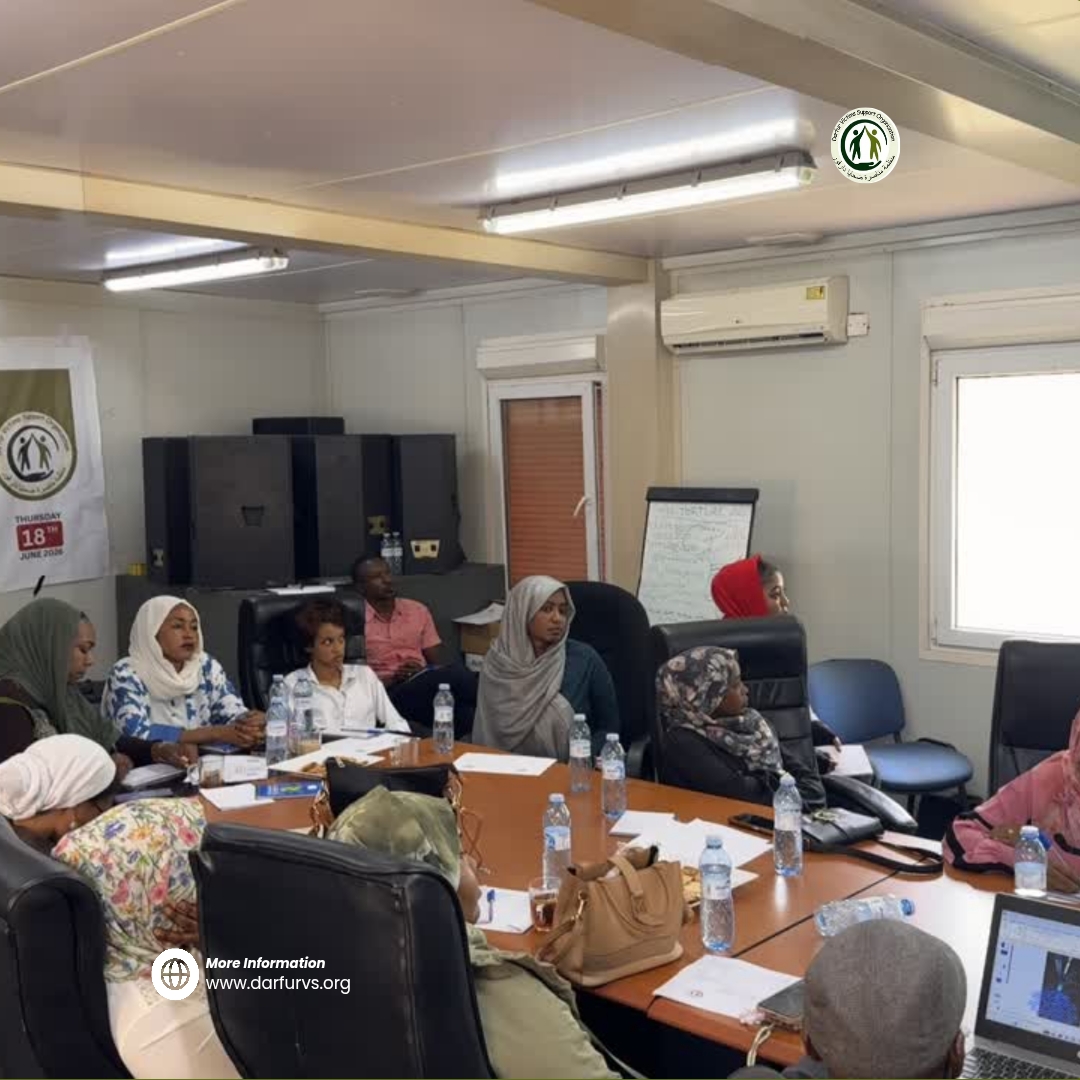
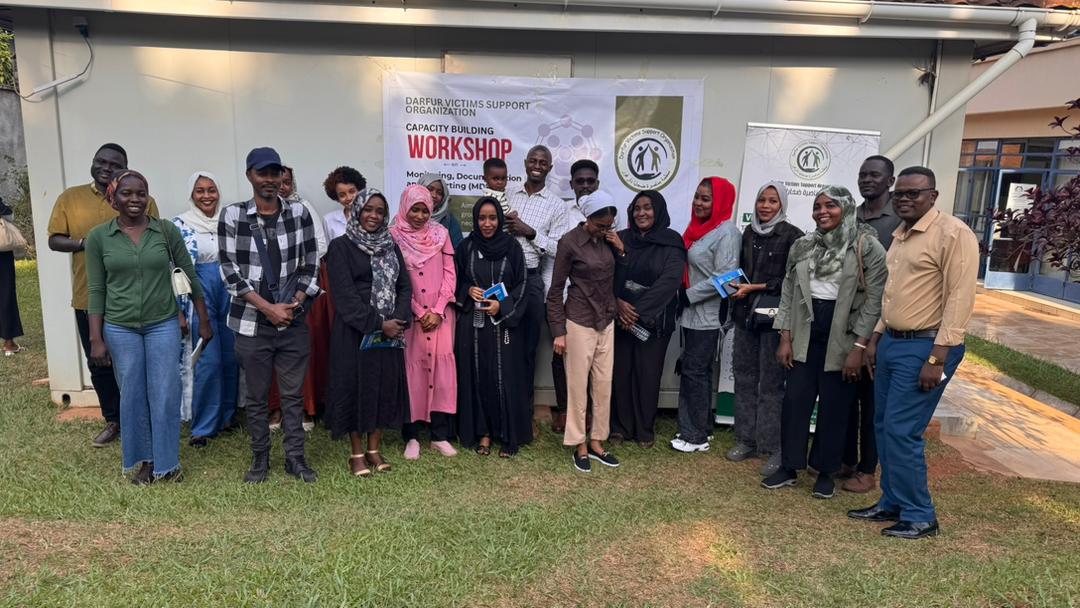
Kampala – The Darfur Victims Support Organization concluded today, Thursday, June 18, 2026, a specialized training program on human rights monitoring and documentation. The program was hosted at the Human Rights House in the Nsambya area of the Ugandan capital, Kampala, with the participation of more than 27 male and female trainees from civil society organizations, legal professionals, journalists, and youth activists in the field of human rights.
The program comes at a time when Sudan is witnessing one of the most complex and severe human rights violations and humanitarian crises in its modern history, resulting from the continuation of the war that erupted in April 2023, and the accompanying widespread violations affecting civilians in several states, particularly in the Darfur region, Kordofan, Khartoum, and other parts of the country.
The program was delivered by trainer and human rights activist Mr. Adam Rashid, who covered during the training sessions the basic concepts of human rights, field monitoring mechanisms, methodologies for information gathering and verification, in addition to the professional and ethical standards governing documentation processes and the preparation of human rights reports.
The training focused on equipping participants with the practical skills necessary to document violations accurately and objectively, including documenting killings, injuries, arbitrary detentions, enforced disappearances, sexual violence, forced displacement, and violations associated with armed conflicts, while emphasizing the importance of protecting victims and witnesses and maintaining the confidentiality of information.
The program featured practical sessions on how to collect evidence and conduct interviews with victims, survivors, and witnesses, as well as the use of modern tools to verify information and review data before including it in human rights reports.
Participants confirmed that the training contributed to enhancing their professional capacities and strengthening their understanding of international standards for documenting violations, enabling them to contribute to producing more accurate and credible reports to support advocacy and justice efforts.
Such programs gain increasing importance in light of the ongoing war in Sudan, where monitoring and documentation processes represent one of the essential tools to preserve the rights of victims and record events and violations in a professional manner that can be relied upon in the future for pathways of justice, accountability, and redress.
Human rights experts believe that the systematic documentation of violations is not limited to merely recording events, but also contributes to building a national memory that preserves the rights of victims and provides reliable information for human rights organizations, international bodies, and independent investigative mechanisms, thereby helping to combat impunity and enhance the chances of achieving justice.
The program concluded with an open discussion session during which participants exchanged experiences and lessons learned. The main challenges facing those working in the field of monitoring and documentation inside Sudan and in areas of asylum and displacement were also discussed.
At the end of the event, the Darfur Victims Support Organization extended its thanks to the participants, confirming the continuation of its efforts in capacity-building for human rights defenders and promoting a culture of professional documentation for violations related to the Sudanese conflict.