Introduction
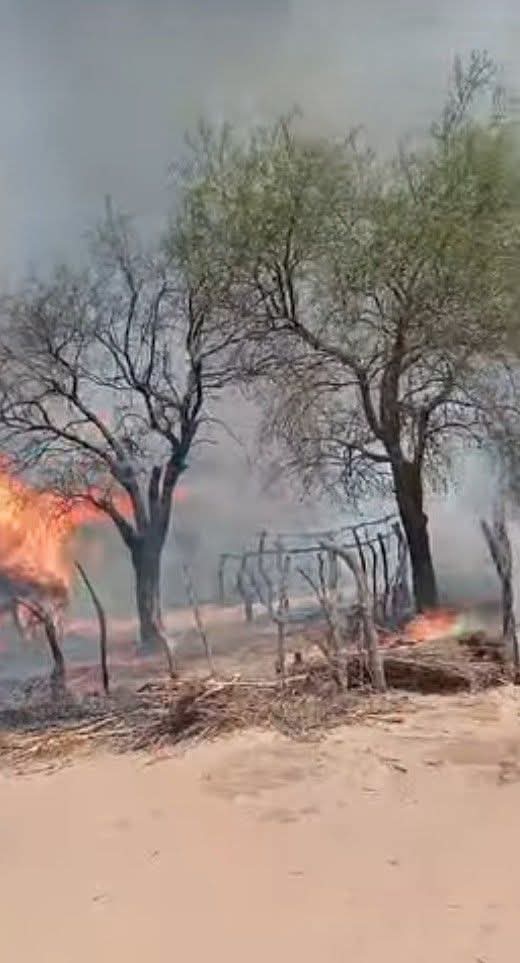
Parties to the conflict in Sudan continue to commit grave violations against civilians amid the expanding scope of hostilities inside El Fasher city, North Darfur State, and the targeting of civilian areas and shelters for internally displaced persons (IDPs). Displacement is no longer a safe haven for civilians fleeing combat; rather, in many instances, it has become a new locus for exposure to killing, injury, and further displacement.
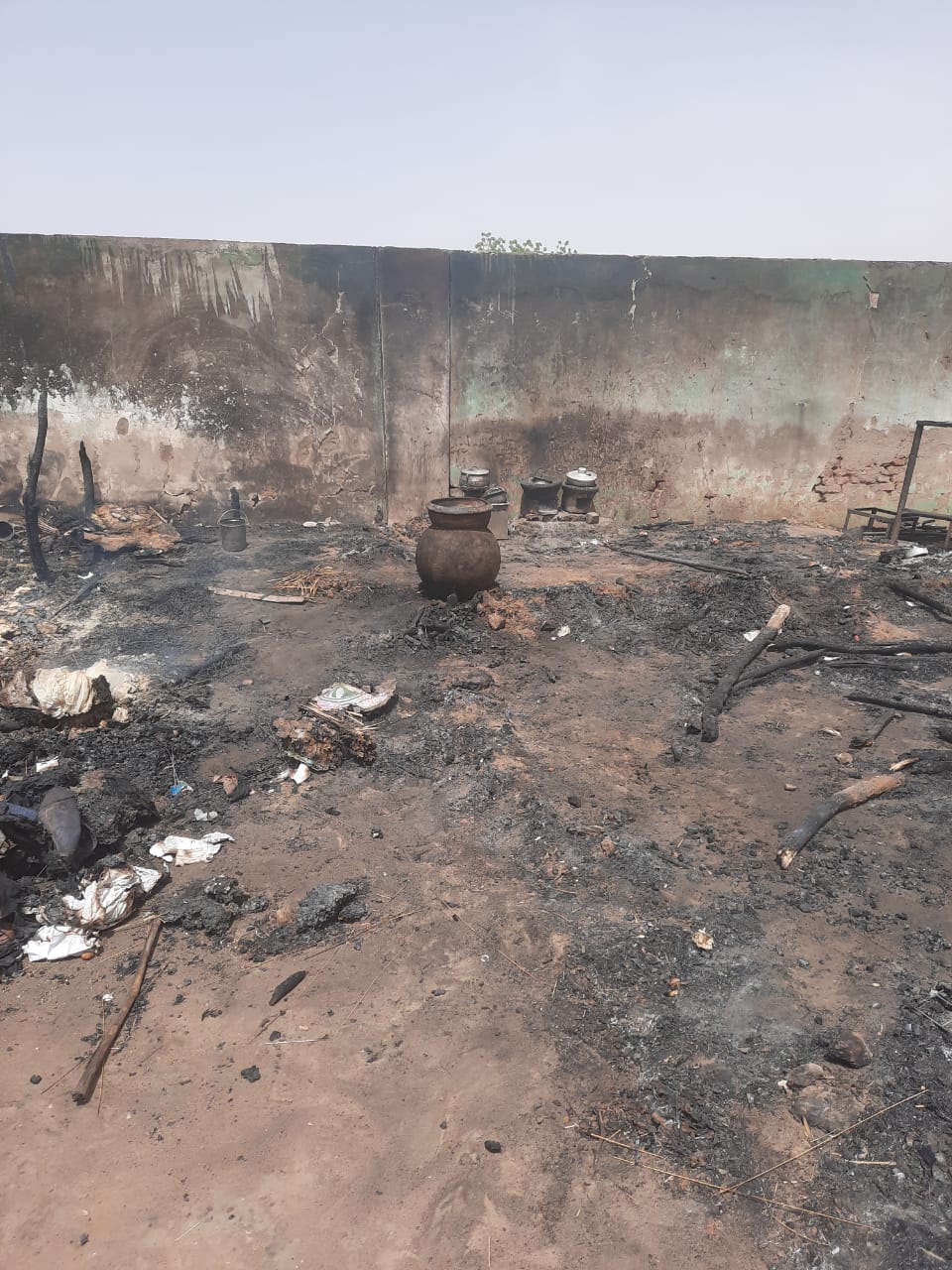
In this report, the Darfur Victims Support Organization documents the incident resulting in the death of civilian Ismail Adam Abdel Rahman inside Ali Al-Sanousi School in the Al-Kifah neighborhood of El Fasher, which was being used as a shelter housing hundreds of displaced families. The death was caused by artillery shelling attributed by a witness to the Rapid Support Forces (RSF). The report is based on an interview conducted by the organization with the victim’s wife, who detailed the sequence of displacement, the attack, and its humanitarian consequences on her family.
The Facts
The witness—whose identity is withheld by the organization and who is referred to only by the initials (A.D.M.) for her safety—stated that she is 38 years old, a housewife, married, and a mother of seven children. She previously resided with her family in the Khor Siyal neighborhood of El Fasher.
With the escalation of military operations and repeated shelling inside the city, the family was forced to leave their home on June 30, 2024, to seek refuge at Ali Al-Sanousi School in the Al-Kifah neighborhood. The school had been converted into an IDP shelter housing approximately 175 families who fled neighborhoods affected by the fighting.
According to her testimony, the displaced persons resided in the school under diren humanitarian conditions, relying on the efforts of volunteers and local initiatives amidst ongoing military operations around the city.
At approximately 4:00 PM on Wednesday, September 25, 2024, the school was subjected to artillery shelling. The witness stated that four shells fell within the perimeter of the school: one in the eastern side, another in the center, a third in the western side, while the fourth shell exploded within the shelter compound, causing panic among the displaced residents.
During the attack, her husband, Ismail Adam Abdel Rahman, sustained a direct and severe injury to his back. Despite efforts to render first aid, he succumbed to his injuries. The witness reported that volunteers rushed to the scene following the shelling and managed to evacuate the displaced families from the school, while her husband was buried in El Fasher.
Following this incident, the family was forced into displacement once again. They left El Fasher in October 2024 for the Shangil Tobaya area, before subsequently moving to the Golo locality in Central Darfur State—a trajectory of repeated displacement dictated by military operations and persistent insecurity.
As a result of her husband’s death, the witness became the sole provider for seven children under extremely severe humanitarian and economic conditions, having lost her home, stability, and breadwinner all at once.
Legal Assessment
The facts set out in this report indicate the potential occurrence of grave violations of international humanitarian law. According to the information collected by the organization, Ali Al-Sanousi School was used exclusively as a shelter for civilians and IDPs, and there was no information indicating that it was used for military purposes or that military targets were present inside or in its immediate vicinity.
International humanitarian law—specifically Common Article 3 of the 1949 Geneva Conventions and Additional Protocol II of 1977—prohibits directing attacks against civilians or civilian objects. It further obligates parties to the conflict to distinguish at all times between civilians and combatants, and between civilian objects and military objectives.
It also prohibits carrying out indiscriminate or disproportionate attacks that could result in loss of civilian life, injury to civilians, or damage to civilian objects.
Should it be proven that the attack targeted the shelter with knowledge of its civilian character, or was carried out without taking the necessary precautions to protect civilians, this may amount to a war crime under Article 8 of the Rome Statute of the International Criminal Court (ICC).
Furthermore, the repeated forced displacement experienced by the family as a result of military operations reflects the ongoing suffering of civilians in Darfur and underscores the urgent need to take measures to protect them and ensure their safe passage away from areas of active combat.
Recommendations
The Darfur Victims Support Organization calls on all parties to the conflict to fully adhere to the rules of international humanitarian law and to refrain from targeting civilians, IDP shelters, and civilian infrastructure.
It also calls for an independent and impartial investigation into the shelling of the Ali Al-Sanousi School in El Fasher to identify those responsible for the attack and ensure their accountability in accordance with international standards.
The organization urges the United Nations mission, international fact-finding mechanisms, and the Office of the High Commissioner for Human Rights (OHCHR) to document this incident among the violations committed against civilians in Darfur and to ensure that perpetrators do not enjoy impunity.
Additionally, the organization demands the provision of effective protection for internally displaced persons, the securing of shelters against attacks, and the guarantee of unhindered access for humanitarian aid, along with the provision of humanitarian, psychological, and social support to families that have lost their breadwinners as a result of the conflict—most notably women and children.
Conclusion
This case exemplifies the heavy human toll paid by civilians in Darfur due to the continuation of the armed conflict and the targeting of civilian areas. Rather than serving as safe havens for families fleeing the war, shelters have themselves become vulnerable to attack, causing further casualties and driving new waves of displacement.
The death of Ismail Adam Abdel Rahman inside an IDP shelter, leaving his wife alone to care for seven children after repeated displacement, is not an isolated incident; it represents the reality of thousands of families in Darfur. The Darfur Victims Support Organization stresses that protecting civilians and holding perpetrators of violations accountable are essential prerequisites for achieving justice, ending impunity, and establishing the necessary foundation for a lasting and sustainable peace in Sudan.