West Darfur: Preliminary Documentation of Violations Following the Armed Attack on Wadi Badra and Kulbus Locality
The Darfur Victims Support Organization (DVSO) issues this report as part of its ongoing efforts to monitor and document the human rights situation and compliance with international humanitarian law in the Darfur region. The report is based on field information collected in the aftermath of the armed attack that targeted the Wadi Badra area and Kulbus Locality in West Darfur State on 29 June 2026.
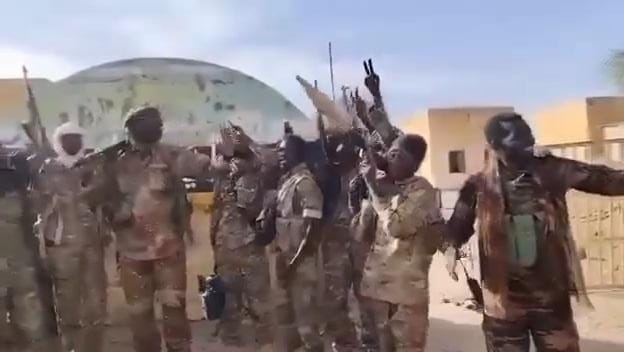
Information verified by the Organization indicates that the attack commenced at approximately 4:00 p.m. and was carried out by the Joint Force, supported by armed elements, using approximately eighty Toyota Land Cruiser military vehicles, in addition to groups operating on motorcycles and horseback. Following the armed confrontations, the violence spread into residential areas, where the Organization documented the killing of one girl and the serious injury of two children, alongside widespread looting targeting private property and livestock. These events forced thousands of civilians to flee across the border into Chad.
DVSO concludes that the documented incidents raise serious concerns regarding grave violations of international humanitarian law which, if established through an independent investigation, may amount to war crimes requiring accountability. The Organization therefore calls for urgent action to ensure the protection of civilians and to prevent those responsible from enjoying impunity.
This report is based on information that had been verified as of the date of publication. Given the prevailing security constraints and the limited access to certain affected areas, some facts or figures may be updated as additional credible information becomes available.
Methodology
The Organization employed a rapid documentation methodology commonly used in emergency situations. Information was collected through direct interviews with eyewitnesses, victims’ families, and community leaders from Kulbus Locality and surrounding areas. The findings were further cross-checked against information obtained from independent field sources in order to strengthen accuracy, consistency, and impartiality.
In accordance with the principles of victim and witness protection, the identities of certain victims of looting have been withheld and replaced with initials to safeguard their security and privacy. The names of the child victims have been included with the informed consent of their families for documentation purposes. The Organization retains all supporting evidence and documentation in accordance with internationally recognized professional standards.
Documented Facts and Violations
Information verified by the Organization indicates that the military operations began in the Wadi Badra area before extending into Kulbus Locality, where clashes erupted between the Joint Force and the Rapid Support Forces (RSF), ultimately resulting in the Joint Force taking control of the area. Following the confrontation, the attacking forces advanced into residential neighbourhoods within the locality, while RSF forces withdrew from several positions, creating a security vacuum that was exploited by armed groups to carry out looting and open fire in populated civilian areas.
Testimonies documented by the Organization indicate that gunfire continued inside residential neighbourhoods even after the direct clashes had subsided, causing widespread panic among civilians and forcing large numbers of residents to flee their homes in search of safety.
The Organization also documented several incidents of looting targeting civilian property and livelihoods. These included the theft of a motorcycle belonging to a resident identified by the initials (M.B.A.); the looting of a substantial sum of money from the home of another resident identified as (A.M.H.) following the forcible entry into his house; and the seizure of smartphones and charging equipment from the residence of (A.A.A.), who relied on operating a small mobile-phone charging business as the primary source of income for his family.
In a related incident, the Organizations documented the seizure of an estimated 200 to 250 head of cattle and sheep belonging to Mr. Hussein (F.D.F.). The loss of this livestock deprived the family of its principal source of income and its sole means of livelihood.
The organization further documented the killing of Rimaz Ibrahim Abdullah Mohamedin, a 12-year-old girl, who was fatally struck by a bullet while inside her home. Two other children—Hamoudi Amer Mohamed Sharaf Al-Din (8 years old), and Abdul Samie Ezzeldin Yahya Ismail (6 years old)—sustained serious gunshot injuries. Both children received emergency first aid at local health facilities with limited medical capacity, although their condition requires urgent referral to better-equipped medical centres.
Taken together, these documented incidents indicate that civilians, their property, and their means of livelihood suffered direct harm during the military operations. They raise serious concerns regarding compliance by the parties to the conflict with their obligations under international humanitarian law, particularly those relating to the protection of civilians and civilian objects, as well as the principles of distinction, proportionality, and precaution in the conduct of hostilities.
The incidents documented by the organizations have significantly worsened the humanitarian situation in Kulbus Locality and its surrounding areas. Large numbers of civilians were forced to flee their homes due to fears of continued violence and its further expansion. Preliminary field estimates indicate that between 7,000 and 8,000 people—predominantly women, children, and older persons—crossed the international border into the Republic of Chad, while others were displaced to neighbouring areas within West Darfur State.
The areas most severely affected included the neighbourhoods of Al-Nasr, Al-Naseem, Al-Nahda, Al-Tadamon, Al-Imtidad, and the various sections of Al-Salam, in addition to the villages of Karina, Um Siyala, and Abu Shajira. Information received by the Organization indicates that residents experienced widespread panic, forcing many to flee their homes and abandon their belongings without being able to take even their basic necessities.
Information available as of the date of this report indicates that displaced persons are facing extremely harsh humanitarian conditions, characterized by acute shortages of shelter, food, safe drinking water, and healthcare services. These challenges are further compounded by rising temperatures and the approaching rainy season, significantly increasing the risk of disease outbreaks and the deterioration of public health conditions, particularly among children, women, and older persons. At the time of publication, thesn had not been able to verify the existence of a humanitarian response commensurate with the scale of the rapidly growing needs of the affected population.
The documented incidents indicate the possible violation of several fundamental principles of international humanitarian law, including the principles of distinction between civilians and combatants, proportionality, and the obligation to take all feasible precautions to protect civilians and civilian objects during military operations. Furthermore, the widespread looting of private property and livestock, coupled with the killing and injury of children within residential areas, raises serious concerns regarding violations that may, if established before a competent judicial authority, amount to war crimes requiring thorough investigation and accountability under international law.
Conclusions and Recommendations
The Darfur Victims Support Organization (DVSO) considers that the facts documented in this report demonstrate the continued exposure of civilians in Darfur to grave risks arising from the extension of military operations into populated areas, accompanied by killings, injuries, looting, and forced displacement. These developments have further exacerbated the humanitarian crisis and undermined the protection afforded to the civilian population under international law.
Accordingly, the organization calls upon all parties to the conflict to immediately cease hostilities in populated areas and to fully comply with their obligations under international humanitarian law. This includes ensuring the protection of civilians, distancing military operations from civilian concentrations, refraining from targeting or exposing civilian objects to danger, and taking all feasible measures to minimize harm to the civilian population
The Organization further calls upon the United Nations Human Rights Council, the relevant United Nations Special Procedures, and other competent international mechanisms to take urgent steps to ensure the establishment of an independent, impartial, and credible investigation into the incidents documented in this report, with a view to identifying those responsible, ensuring accountability in accordance with international law, and preventing impunity for serious violations.
DVSO also urges humanitarian partners—including the United Nations High Commissioner for Refugees (UNHCR), the World Food Programme (WFP), the United Nations Office for the Coordination of Humanitarian Affairs (OCHA), and the International Committee of the Red Cross (ICRC)—to strengthen the emergency humanitarian response for displaced populations both within Sudan and along the Sudan–Chad border. Humanitarian assistance should be delivered rapidly, safely, and without obstruction, with priority given to the most vulnerable groups, particularly children, women, and older persons.
The Organization further emphasizes the need to support the Chadian authorities and humanitarian actors operating in Chad in responding to the increasing influx of displaced persons by ensuring access to international protection, adequate shelter, food, safe drinking water, healthcare, and protection services in accordance with internationally recognized humanitarian standards.
Concluding Remarks
This report constitutes a preliminary field assessment based on information that the organization was able to verify as of the date of its publication. The Darfur Victims Advocacy Organization reaffirms its commitment to continuing the documentation of developments on the ground, collecting additional evidence and witness testimonies, and updating this report as further verifiable information becomes available.
The Organizations further confirms that it has preserved the documentary materials and supporting evidence relating to the incidents described in this report in accordance with internationally recognized professional documentation standards. These materials will be made available to competent national, regional, or international accountability mechanisms, where appropriate, in support of efforts to ensure accountability, justice, and effective remedies for victims.